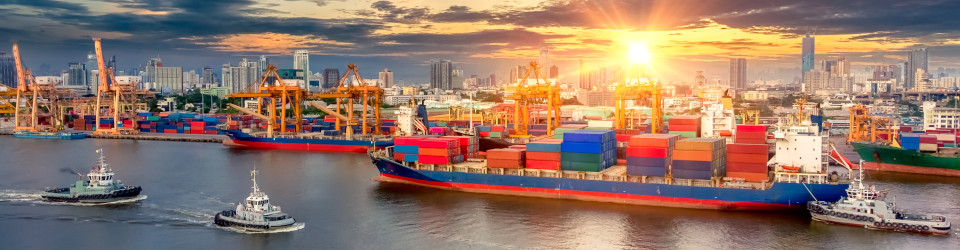
As reported in Plastics News, US retail plastic bag makers have filed a petition with the US government requesting an additional 25% tariff on bags from China, Indonesia, Malaysia, Taiwan, Thailand, and Vietnam.
Continue readingMonthly Archives: April 2026
Sharp Drop in China’s Imports of Methanol from the Middle East in March 2026
The impact of the Iranian conflict that began February 28, 2026 was evident in China’s methanol imports in March.
Continue readingTrends in Methanol Global Trade 2021-2025; Implications for 2026
Global trade in methanol has been relatively steady around 40 million tons per year from 2023-2025. Volume in 2026 is expected to be lower because of the current conflict in the Middle East, the world’s largest methanol exporting region.
Continue readingTrends in Anhydrous Ammonia Global Trade 2021-2025; Implications for 2026
Global trade patterns in anhydrous ammonia shifted to counter the effect of the Ukraine-Russia conflict that began in 2022. The current shutdown of the Strait of Hormuz, through which a major part of the world’s anhydrous ammonia is shipped (in addition to the natural gas that is used for anhydrous ammonia production in other regions), will again disrupt trade flows and also threaten the global fertilizer outlook.
Continue readingTrends in Propylene Copolymers Global Trade, 2021-2025; Implications for 2026
Propylene copolymers, defined as polymer containing less than 95% propylene monomer by weight and the remainder another olefin(s), are exported from three main regions: Western Europe, the Middle East, and Asia-Pacific. This is unlike homopolymer, where exports from the Middle East currently account for about half of total exports and, as such, are highly vulnerable to supply constraints in the region.
Continue readingTrends in Polypropylene Homopolymer Global Trade, 2021-2025; Implications for 2026
The Middle East is the world’s largest polypropylene exporting region. The conflict in the region, now entering its second month, continues to restrict not only exports of polymer, but also of feedstocks. Global trends in 2026 will likely be vastly altered from the past, with tight supplies, higher prices, and a major restructuring of trade routes for as long as the conflict continues, and beyond.
Continue readingIranian Exports of Anhydrous Ammonia, Ethylene Glycol, Polyethylene, and Methanol Accounted for 16%-61% of Total Middle East Exports in 2025
Export statistics published by the Iranian government show much higher volumes than are visible from trading partner import statistics, largely because a great deal of Iranian material is transshipped through other Middle Eastern countries, noting especially UAE.
Continue reading